
Choose a book you mostly understand
If every line contains unfamiliar words, reading becomes constant dictionary work. Begin with short stories, graded readers or familiar topics where you can follow the meaning without looking up everything. That context helps you remember how a word is used.
Save phrases, not just isolated words
When you encounter a useful expression, highlight a short sentence and write what it means in that passage. A dictionary translation without context may not show the tone or grammatical form. Review saved examples later rather than interrupting every paragraph.
Listen to check pronunciation
Text-to-speech can help you hear sentence rhythm and unfamiliar spellings. Select the correct language voice in Android settings, but remember that synthetic speech may mispronounce proper names or words from another language. Compare difficult examples with a trusted dictionary that includes native-speaker audio.
Revisit the same short passage
Read once for meaning. On a second pass, look up a few words that blocked understanding. Then listen and follow the text. Repeated exposure to one useful passage often makes more sense than collecting dozens of words you never see again.
Keep the session small
Set a manageable target, such as one scene or a few pages. Record a couple of expressions you would actually use. Choose a reader with search and bookmarks so you can revisit them without losing your normal reading position.
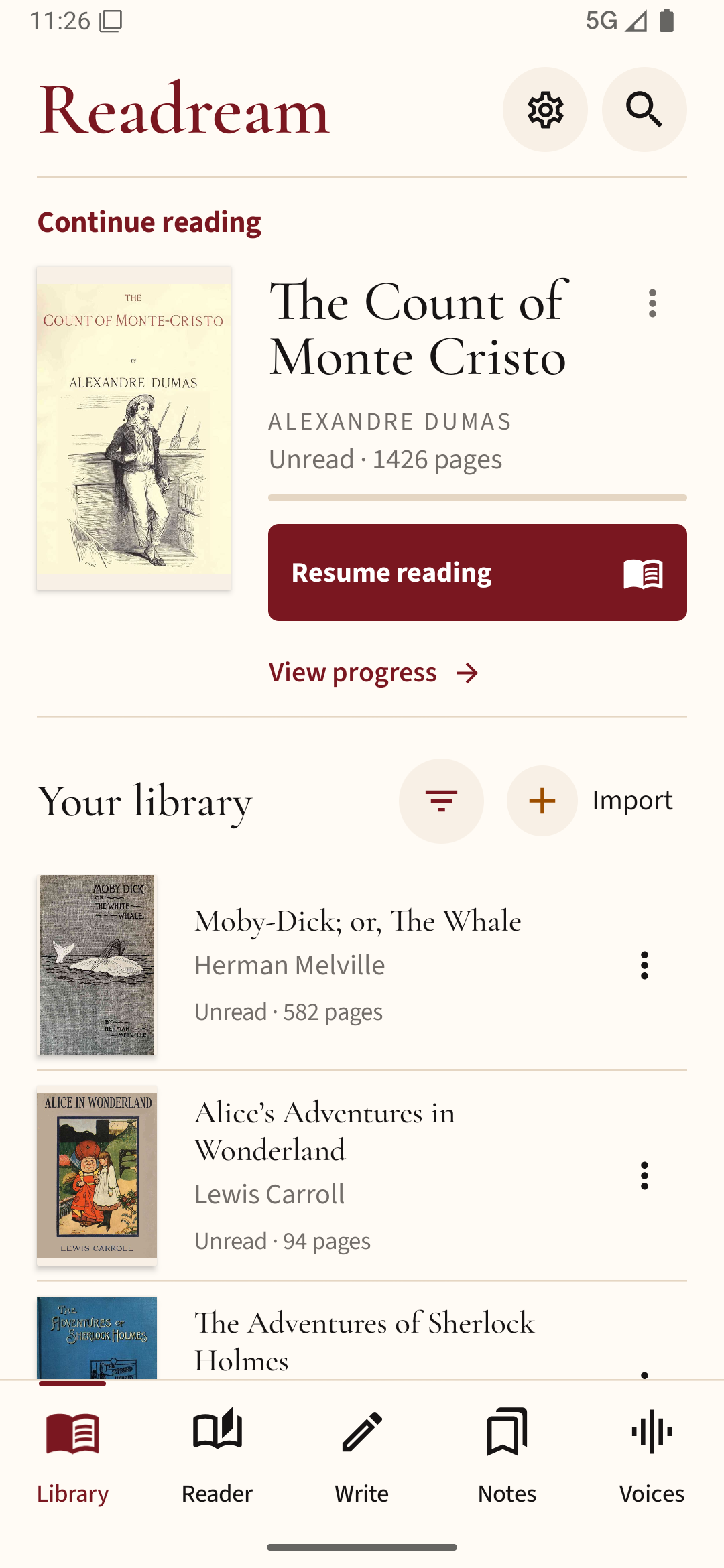
You can use a familiar passage in Readream Basic to practise reading alongside your phone’s installed voices. Choose a voice that matches the book’s language and keep the pace slow enough to follow.