
Pick a book for your current attention
A dense history book and a light mystery ask for different amounts of focus. Match the book to the time and energy you have, not to the most impressive title on your shelf. A demanding book may fit weekend mornings better than a tired commute.
Keep the queue small
When you start ten books, returning to any one of them becomes harder. Try keeping one main book and one lighter alternative. Save other ideas in a wish list rather than opening them all. This reduces the time spent remembering characters and arguments.
Check whether a slow section matters
Some books become better after an early setup; others never suit your interests. Give a slow chapter a fair attempt, then decide whether to continue. Skipping a book is not failure, and finishing every title is not a requirement for learning.
Make progress visible
Use saved position, chapter markers or a simple note of where you stopped. Reopening at the same passage removes a common reason to abandon a book after a break. For nonfiction, a brief summary at the end of a reading session also helps you return.
Keep pleasure in the process
Read when you can pay attention. Speed matters only when there is a genuine deadline. The goal is to remember, understand or enjoy what you read, not to produce a high number in a tracking app.
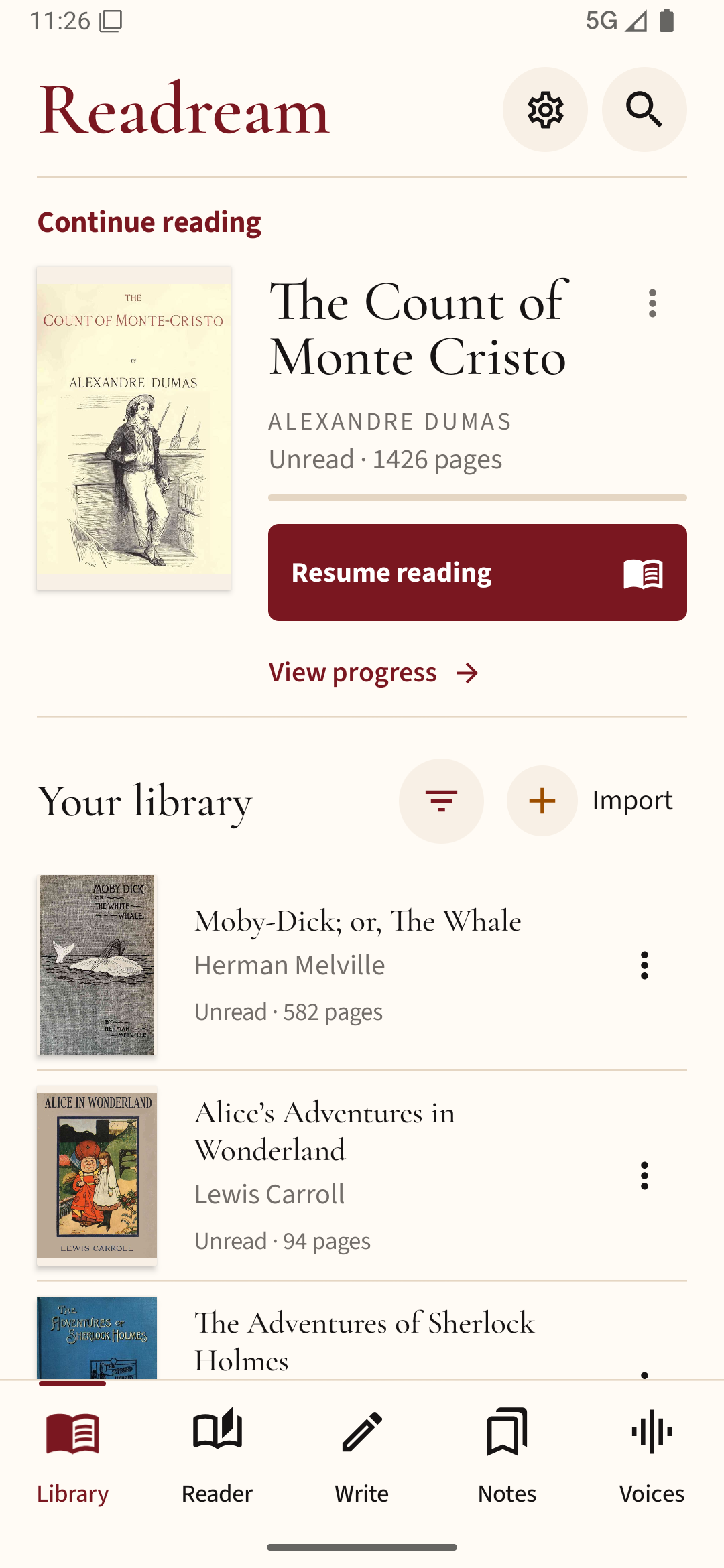
Keeping one book easy to return to can help. Open it in Readream Basic and use its saved reading position to pick up where you stopped, even when you only have a few minutes.